Caring for a leather travel bag takes about 20 minutes, a couple of times a year. Brush it off after trips, wipe it clean when needed, condition it every six months or so, and store it somewhere cool and dry. That’s the whole routine. The rest of this guide explains how to do each step well, and what to do when things go wrong.
What you need
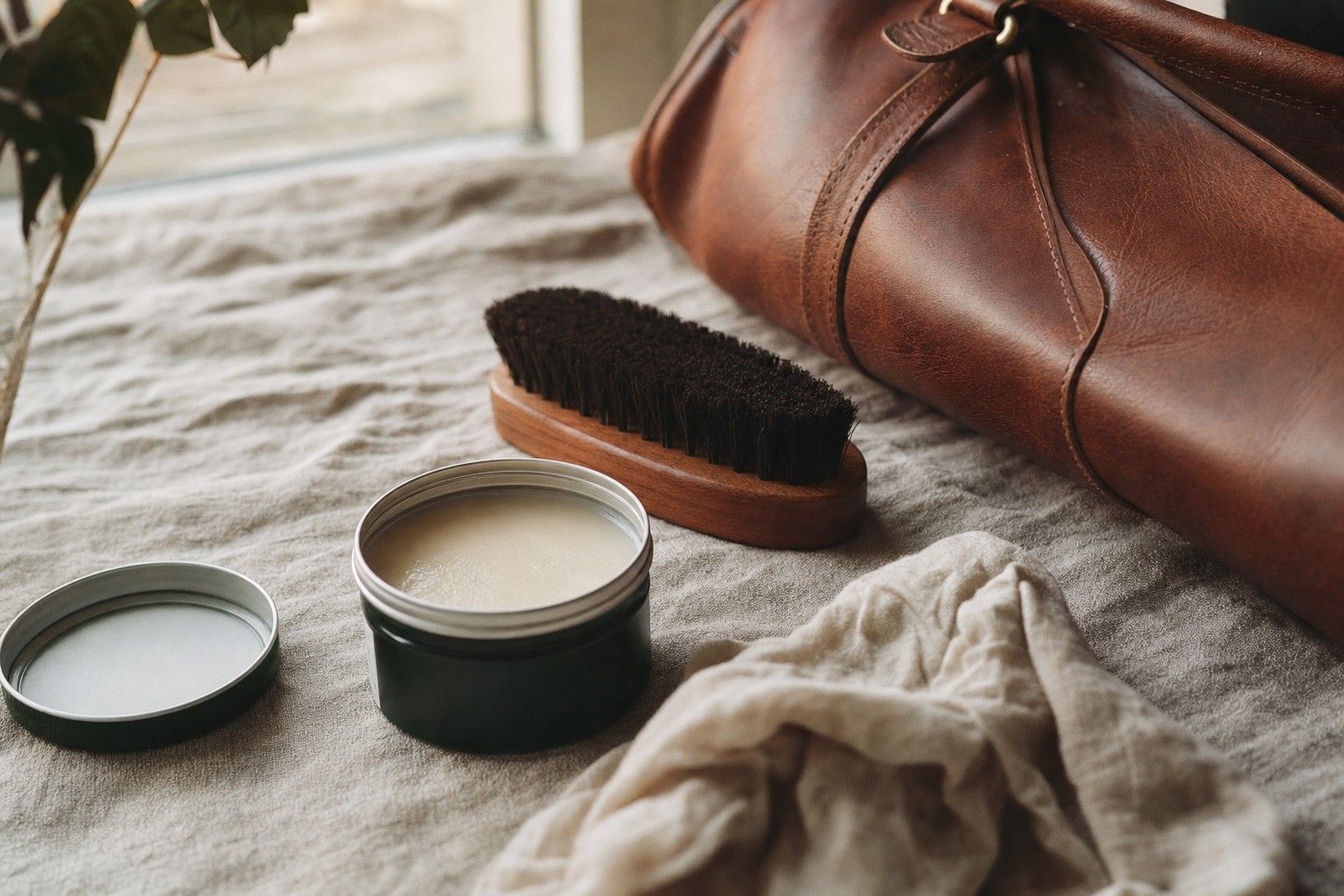
- A soft horsehair brush for dust and dirt.
- Two or three soft cotton cloths (old T-shirts work).
- A leather conditioner suited to your leather. Cream or balm conditioners are easiest to use.
- Optional: a leather cleaner or saddle soap for deeper cleaning.
- A cotton dust bag or old pillowcase for storage.
Always test any product on a hidden spot first, such as the underside of a strap or inside a pocket, and wait a day to check the color.
After every trip
- Empty the bag completely, including pockets. Crumbs and damp clothes cause problems.
- Brush off dust and dirt with the horsehair brush, especially in seams and around the base.
- Wipe with a dry cloth. If the bag got wet, let it dry naturally before storing it.
- Leave it open for a few hours to air out.
Cleaning, when it needs it
Do this when the bag is visibly dirty, or before conditioning.
- Brush off loose dirt first.
- Lightly dampen a cloth with water. It should be damp, not wet.
- Wipe the leather in small sections with gentle pressure.
- For grime that water won’t lift, use a small amount of leather cleaner or saddle soap on a damp cloth, then wipe off any residue with a clean damp cloth.
- Let the bag dry completely at room temperature before conditioning.
Avoid household cleaners, baby wipes, alcohol, and anything with bleach or ammonia. They strip the oils that keep leather supple.
Conditioning
Conditioner replaces the natural oils that leather loses over time. Without them, leather dries out, stiffens, and eventually cracks along folds.
How often: every 6 to 12 months for most people. More often in dry climates, after heavy sun, or after the bag has been soaked.
- Make sure the bag is clean and dry.
- Put a small amount of conditioner on a clean cloth. Less is more.
- Work it in with small circular motions, one section at a time.
- Pay extra attention to folds, handles, and corners, which flex and dry out most.
- Leave it to absorb for 20 minutes to an hour.
- Buff off any excess with a clean cloth.
Expect the color to darken slightly, at least for a while. This is normal, especially on lighter leathers, and is why you test first.
When it gets soaked
- Blot off surface water with a towel. Don’t rub.
- Stuff the bag loosely with plain paper or towels to help it keep its shape and absorb moisture from inside.
- Let it dry slowly at room temperature, away from heaters, radiators, hair dryers, and direct sun. Fast drying makes leather stiff and can cause cracks.
- Once completely dry, condition it.
Water spots often fade as the leather dries and evens out. If one remains, lightly dampen the whole panel with a damp cloth so it dries evenly.
Scuffs and scratches
On full grain leather, light scratches often disappear with a little rubbing from a clean finger or cloth. The warmth and pressure move the oils in the leather and blend the mark in. A little conditioner helps with deeper scuffs. Many marks simply become part of the bag’s patina over time, which is part of the appeal.
Stains
- Oil or grease: blot immediately. Sprinkle cornstarch or talc on the spot, leave it overnight to draw the oil out, then brush it off.
- Ink: hard to remove at home. Take the bag to a leather specialist rather than scrubbing.
- Salt marks from winter sidewalks: wipe with a cloth dampened in a mix of water and a little white vinegar, then wipe with plain water, let dry, and condition.
Storing between trips
- Stuff it with acid-free tissue or plain paper so it keeps its shape. Avoid newspaper, which can transfer ink.
- Cover it with a cotton dust bag. Avoid plastic, which traps moisture and can lead to mildew.
- Keep it cool and dry, out of direct sun, and away from damp basements and hot attics.
- Don’t hang it by the handles for long periods, which can stretch them.
Hardware and zippers
- Wipe metal hardware with a dry cloth. Keep conditioner off it.
- If the zipper sticks, rub the teeth with a little beeswax or a graphite pencil, then run it back and forth a few times.
The bottom line
Brush it after trips, clean it when it’s dirty, condition it twice a year, dry it slowly, and store it in cotton, not plastic. That simple routine is most of what it takes for a leather bag to last 20 years. See how long a leather duffle should last for what to expect, or print our one-page leather care card to keep with the bag.