Full Grain vs Top Grain Leather for Travel Bags
What full grain and top grain leather actually are, how each one holds up on a bag that travels, and which to choose for a duffle you want to keep.
What full grain and top grain leather actually are, how each one holds up on a bag that travels, and which to choose for a duffle you want to keep.
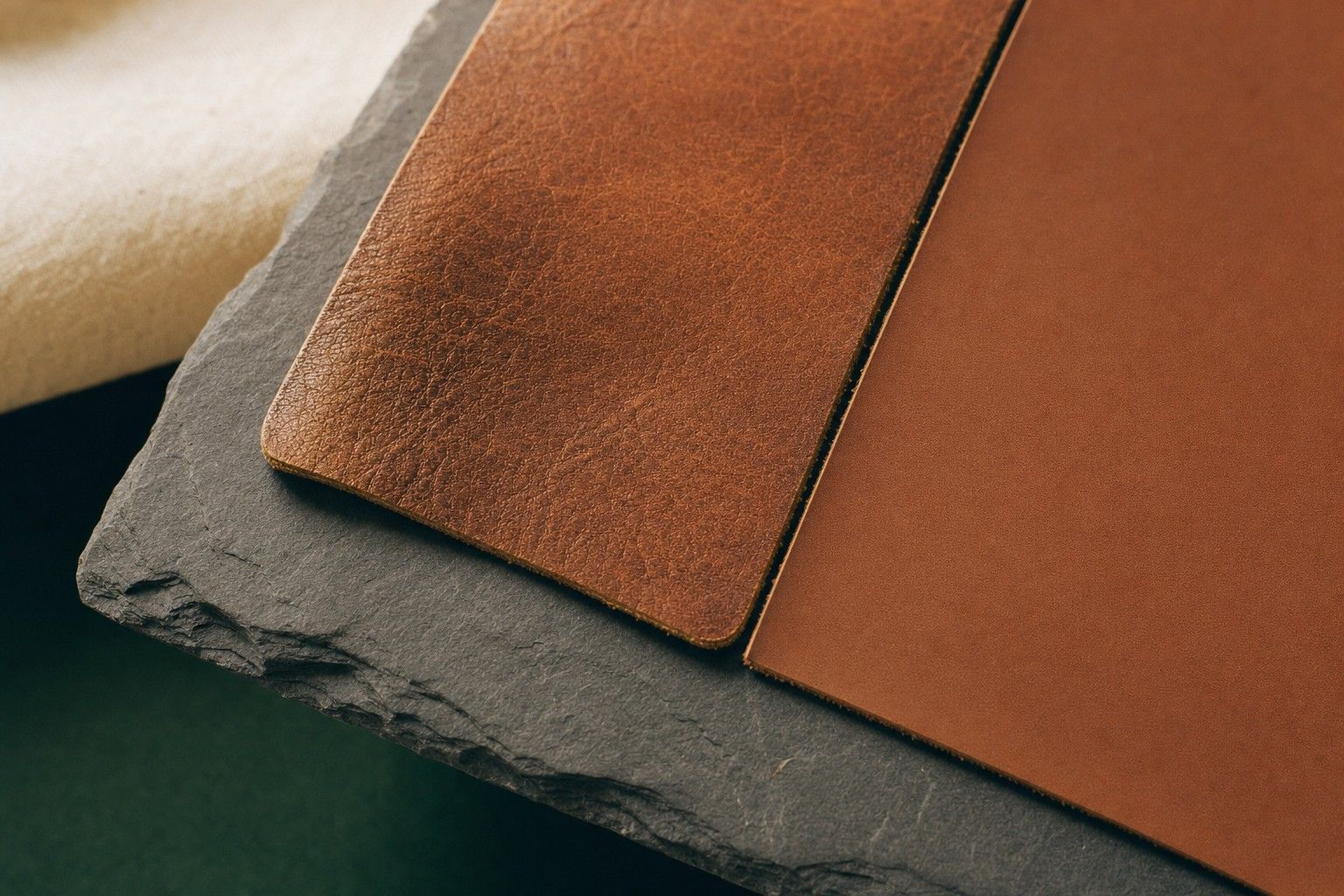
Full grain leather keeps the hide’s entire natural surface. Top grain leather has that surface sanded down and usually coated. For a travel bag that gets thrown in trunks and dragged through stations, full grain is the more durable choice and the one that ages well. Top grain is cleaner-looking out of the box and cheaper, but it doesn’t last as long and wears differently.
Here is what that means in practice.
A cowhide is thick, too thick to use whole for a bag. Tanneries split it into layers.
Full grain and top grain both come from the top layer. The difference is what happens to the surface.
Full grain leather keeps the surface intact. Nothing is sanded off. Marks and grain variations stay visible.
On a travel bag, that means:
Top grain leather has had the very top of the surface sanded or buffed away to remove blemishes. It is usually then given a pigment or finish coat and sometimes an embossed artificial grain pattern.
On a travel bag, that means:
| Full grain | Top grain | |
|---|---|---|
| Surface | Natural, uncorrected | Sanded and coated |
| Strength | Highest | Good |
| How it ages | Develops patina, scuffs blend in | Coating wears, scuffs show |
| Look when new | Natural variations | Even and uniform |
| Water resistance when new | Moderate | Better |
| Price | Higher | Lower |
| Best for | A bag you want to keep for decades | Occasional use, a cleaner look |
“Genuine leather” sounds like a quality mark, but it is usually a lower grade: split leather, heavily corrected and coated to look like top grain. It is fine for small items, but on a duffle that carries weight, it tends to crack and peel at folds and handle attachments. Bonded leather, made from scraps glued together, is worse. Skip both for travel bags. Our leather grades photo guide shows all five grades side by side.
Sellers don’t always label leather honestly. A few clues:
For a duffle you plan to use every few weeks and keep for many years, choose full grain. It costs more up front, but it lasts longer and looks better as it ages, so the cost per year of use is often lower.
Top grain is a reasonable choice if you prefer a clean, uniform look, travel only occasionally, or are working to a tighter budget. Just expect the corners and handles to show wear sooner.
For the rest of the buying decision, including size, construction, and price, see our complete guide to leather duffle bags.